
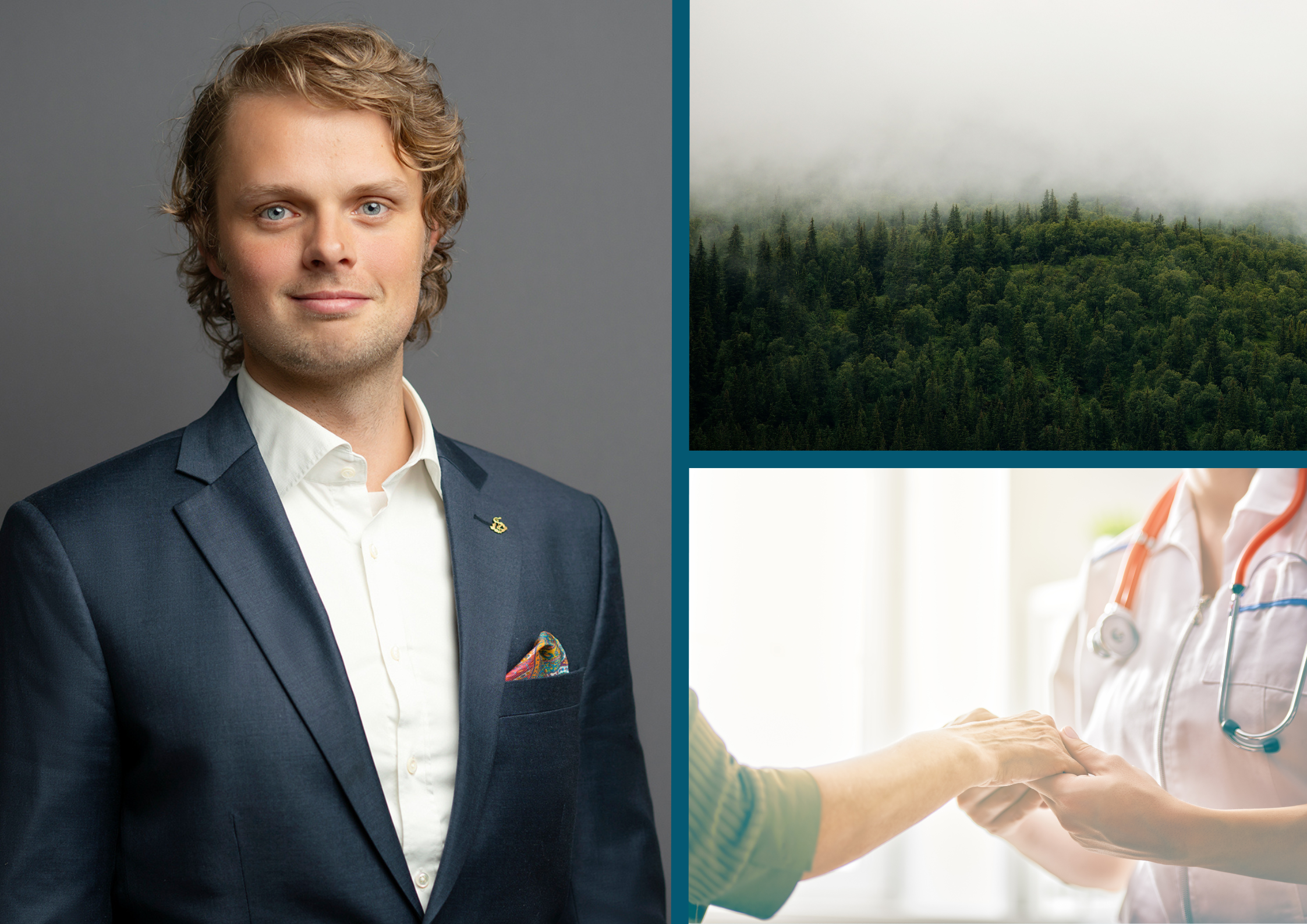
The whole of society must change in line with the Paris Agreement and Agenda 2030 to achieve a sustainable society for us all. This also applies to healthcare, but the challenges are great. The World Health Organization has identified climate change as the single biggest challenge to human health.
Johan Hilm, Director at Sirona, explains how Sirona can help with the transition.
- Today, regions and municipalities are not addressing transition issues at a sufficient pace. In today's healthcare system, the focus is on reactive interventions, which means that those with the greatest needs are prioritized. Sirona's vision is to contribute to the transition to a more proactive approach, to make resources last in the long term. In this way, the need for additional staff is reduced, we get more health for every tax dollar and the ecological footprint is reduced.
- If you are diagnosed with high blood pressure, you are given medication to treat it. This is good, but medication also needs to be complemented by lifestyle advice, for example to exercise more. Health services need to be better at finding the underlying causes and supporting individuals to change them.
How do you support your public sector clients with this?
- In a first stage, we can focus on how staff are utilized, but also work on changing lifestyles and public health to reduce the risk of disease. This will be of great benefit to the individual, while saving resources. We see that the public sector needs to take the lead on this - and on the climate transition in general.
What can Sirona do in practice?
- More than 60 municipalities and a handful of regions have developed carbon budgets that provide a great evidence base. We can link facts to change and action. Many healthcare providers know they need to do something, but not how much and what. We can roll out a structured change process and work to build acceptance around it.
What are the challenges?
- Resistance to change, that it is easy to continue in the same rut. In healthcare, there is often talk of resource shortages and residents' care needs are sometimes perceived as endless, so we must also dare to talk about what we will not offer in the future. Ultimately, climate change is an ethical issue. The way we solve today's care needs must not be at the expense of future generations. We need to take a long-term view. As with any change, we are often hesitant at first, but once you come out the other side, it usually turns out that the changes were actually good.